Your inspection data is fine. Your QA queue is the bottleneck.
The inspection was never the slow part. QA review is quietly one of the most expensive bottlenecks in any sewer program — and most teams never plan around it. Here's why manual QA can't scale, and what changes when it does.
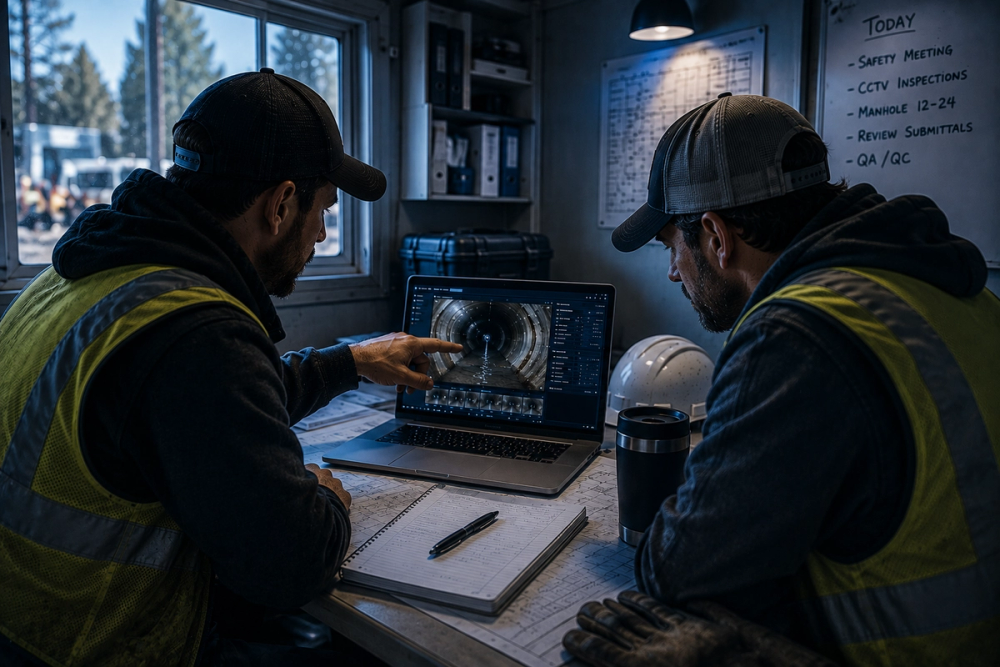
A contractor finishes an inspection and submits the deliverable. Before a single foot of it can inform a rehab decision, someone on the utility or engineering side has to review it: check the coding, verify the calls, accept or send it back. That review step is quietly one of the slowest and most expensive parts of the entire program, and almost nobody plans around it.
It's easy to miss because it doesn't look like a bottleneck. There's no crew standing idle, no camera waiting. There's just a queue of footage sitting in review, and a backlog that grows a little every week. Meanwhile the contractor waits on acceptance, the utility waits on usable data, and the rehab plan waits on both.
So let's talk about why QA is slow, and what changes when it stops being a manual sampling exercise.
Manual QA can only ever check a fraction
A reviewer cannot watch every foot of every submittal. There aren't enough hours. So QA becomes a sample: re-check a percentage, trust the rest, hope the sample was representative. That's not negligence, it's arithmetic. But it means most of the data informing a capital decision was never independently verified, and the errors that do exist tend to surface late, when a number gets challenged and there's no fast way to confirm it.
What you can do: be honest about your real QA coverage. If you're reviewing 10% of footage, you're standing behind 100% of the conclusions on the strength of that 10%.
The slow gate hurts contractors too
Here's the part that's easy to forget. A slow, sampled QA process isn't just a utility problem. When acceptance takes weeks and rejections come back vague, the contractor's payment slips and the rework is guesswork. A faster, more complete review is good for everyone on both sides of the submittal.
That's exactly what the data shows when the review gets automated. In one large municipal program, AI-assisted QA helped cut contractor submittal failures by 55% and saved over a million dollars. Fewer failed submittals means contractors get clean acceptance faster and get paid faster. The only thing that lost was the back-and-forth.
AI QA changes what “complete” means
QAI reviews every foot, not a sample, and flags the segments that need a human's eyes: the low-confidence calls, the inconsistencies, the high-consequence assets. The reviewer stops spending their day spot-checking footage that was fine and starts spending it on the genuine exceptions. Coverage goes from a fraction to all of it, and the reviewer's time goes to where judgment actually adds value.
What you can do: redefine the QA standard around complete coverage with human review of exceptions, rather than a percentage sampled. Then set the rules for what automatically escalates to a person.
What good QA looks like
A healthy QA process turns submittals around in days, not weeks. It checks every foot. It gives contractors specific, consistent feedback instead of a vague rejection. And it produces data the utility can defend line by line, because the same standard was applied to all of it. The review stops being the place good data goes to wait, and becomes the place data gets confirmed fast enough to act on.
The inspection was never the slow part. The review was. Fix the review, and the whole program moves at the speed of the work instead of the speed of the queue.
See QA on every foot. Watch how QAI reviews a full submittal and routes only the exceptions to your team.
[Watch the QAI overview] (or book a demo to see it in action)


STAY AHEAD OF THE FLOW
Get SewerAI updates, product news, and practical guidance for modern sewer inspection programs.