How to prep for the council vote on AI sewer inspection
Bangor, Maine's finance committee approved new AI sewer inspection software in about fifteen minutes. Councilors asked who checks the AI's work, whether cloud video is a security risk, and what happens if the software doesn't work out. Staff had an answer for every one, because of the work they did before the meeting.
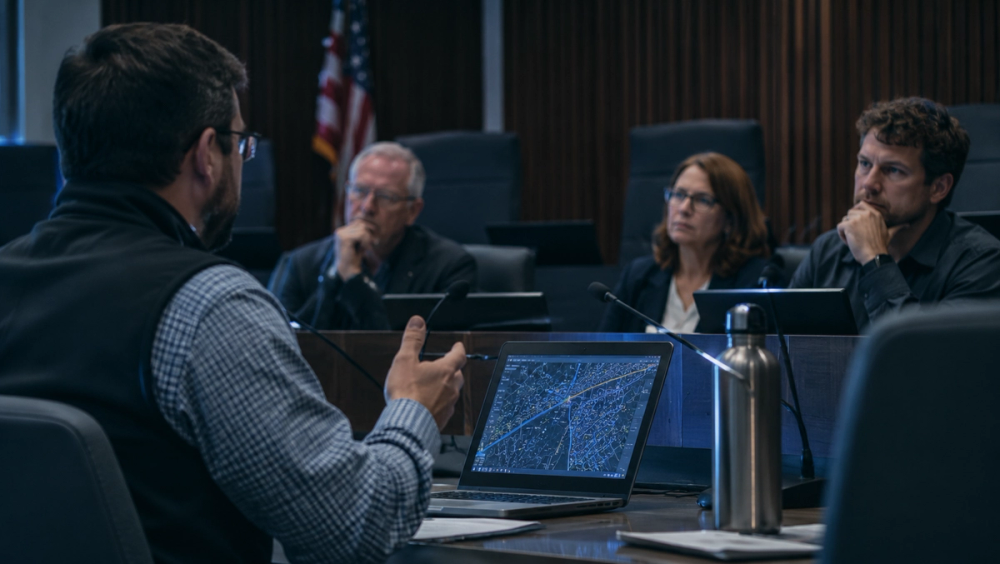
What Bangor, Maine's staff did before the meeting, and how it showed up when the questions came.
On September 21, 2026, Bangor's finance committee reached an item that staff warned up front "isn't so simple to explain" (1:42). The city wanted to replace the software its sewer crews use to inspect, code and track every pipe in the system.
About fifteen minutes later, it was approved. In between, councilors asked who checks the AI's work, whether cloud video puts the sewer system at risk, what happens if the software doesn't work out, and what the city actually gets back. Staff answered every one with specifics.
None of those answers were improvised. Each one traces back to work staff did well before the meeting. If you're preparing to bring AI inspection to your own council, that prep is the part worth copying.
Start with the people already using it
Before recommending anything, Bangor's team called the Maine utility district that first pointed them toward SewerAI. Then they kept calling:
We spoke with them. They're very happy with it. They've been using it for a little while now, and we talked to a couple of other municipalities around the country who've used it as well, and it's pretty well received.
They also compared several platforms side by side, and they could say exactly what set their pick apart:
That ability to do that modeling and forecasting is one of the biggest things that set SewerAI above the others. The others were really just database programs that allowed you to view videos and see lists of problems in a pipe segment.
That's the whole recommendation in three sentences. The peer calls meant staff could repeat what other utilities had told them firsthand, and the comparison gave them one clear reason for their choice.
Know who checks the work, and say it plainly
The first concern in the room was the word "AI" itself. Someone at the table named it directly, "I know the AI can be scary," and then put it in familiar terms. Public works already runs a camera over city roads to assess pavement. Reviewing sewer video with software is the same idea, underground.
The staffer who led the evaluation had the more important answer ready:
For this machine learning defect detection to be NASSCO certified, the companies who do it, they still have another operator go back through and validate all of the defects found by the software. So it still has a pair of human eyes on it before we treat it as authoritative data.
Staff also kept the city's crew at the center. Operators still drive the camera and log the major defects they see. Bangor's own NASSCO-certified staff still build the capital plan.
Before your meeting, learn exactly how review and certification work on the platform you're recommending. Councilors don't need the technical detail. What reassures them is knowing a certified person signs off on the results.
Map what the platform touches before anyone asks
One councilor made a point of saying "I'm very excited about this, by the way," and still raised cybersecurity:
Wastewater infrastructure, sewer infrastructure is like the top of the list for people who want to attack cities, whether it be cyber or otherwise.
If detailed video of every pipe lives in the cloud, what keeps it from being misused?
Staff had already drawn the line. Anything with controls, like combined sewer overflow gates and pumps, stays on the city's separate SCADA system, which isn't exposed to the internet. The inspection platform holds only gravity sewer video, and those same pipe segments already appear on the city's GIS map. Staff added that the city had worked through its systems to carve out anything that could be a concern.
Do that mapping before the meeting: what the platform holds, what it doesn't, and what controls your system. Specific answers show the city has done its homework. General reassurance tends to raise more questions.
Ask every vendor about contracts and data ownership
A councilor asked how the approval would work going forward: "Does it just automatically renew or does it come back before this committee?"
Staff had asked vendors the same thing during their evaluation, so the answer was ready:
We're not locked into a contract for one thing, and that is a big differentiator from what we were using previously.
Bangor's previous system had locked the city into five years. This time, staff described a notice window before each renewal, and they had checked data ownership with every vendor on their shortlist:
One particular thing that we made sure of for all of the companies that we looked at closely was that we would retain ownership of the data.
That means a full export if Bangor ever decides to move on.
Ask every vendor about contract length, renewal and data ownership during the evaluation. If the terms let the city leave with its data, say so early in the presentation.
Tie it to a decision the council already cares about
Bangor didn't bring the software in isolation. The city is speccing a new, more advanced CCTV van to replace the two it runs today, a purchase the council had already discussed during budget season. Staff wanted the right software in place first, so the item read as one step in a plan the council already knew. Bangor also inspects under a consent decree that sets a minimum amount of pipe every year, a requirement the city has consistently exceeded.
When a councilor asked, "Do you have any idea of how much time you're going to save?" staff answered in terms the council already cares about. Crews will spend less time parked in busy roads, doing the work "more efficiently with less disruption to traffic." The bigger payoff is back in the office:
One of the real time savers is really on the back end, because it's going to help take a lot of the subjectivity out when we sit down and do our capital planning every year. There's often disagreement with prioritizing where to spend that finite amount of money that we have every year. This is really going to help make it a much easier, more objective conversation.
Find the decision your council is already weighing, whether it's a truck, a consent decree milestone or a budget fight, and show where the software fits into it.
What to take into your own meeting
Bangor's approval took about fifteen minutes. The prep behind it included peer calls, a side-by-side comparison, a security review, contract questions asked of every vendor, and a clear link to the van the council already expected. By the time councilors asked their questions, staff had already answered them for themselves.
Before your own meeting, run through the same list. The councilors in Bangor asked fair questions, and staff were ready for every one.
Watch the meeting yourself. Bangor Finance Committee, September 21, 2026 →
See how SewerAI fits your system. Book a demo →

STAY AHEAD OF THE FLOW
Get SewerAI updates, product news, and practical guidance for modern sewer inspection programs.