How to stay ahead of your CMOM program instead of chasing it
Most compliance trouble doesn't start with a violation. It starts with a calendar. The programs that struggle aren't the ones that don't care — they're the ones treating compliance as a periodic reporting task instead of a continuous one.
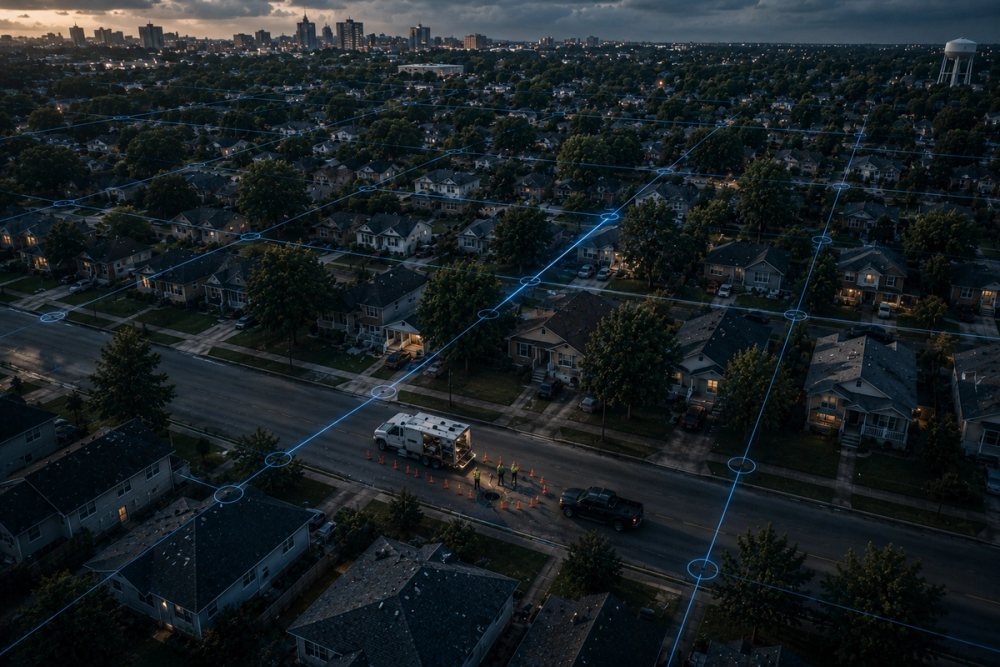
Most compliance trouble doesn't start with a violation. It starts with a calendar. A CMOM program or a consent decree commits a utility to inspecting a defined share of its system on a schedule, documenting condition, and being able to prove all of it on demand. The programs that struggle aren't the ones that don't care. They're the ones treating that as a periodic reporting task instead of a continuous one, and then scrambling every time a deadline or an auditor arrives.
The shift that changes everything is small to describe and hard to do by hand: stop producing compliance and start running a program that produces compliance as a byproduct.
What these programs actually require
Strip away the acronyms and the requirements are consistent. Know what you own. Know its condition. Maintain it on a defensible schedule. Show that capacity keeps up with demand. And be able to report all of it, accurately, when asked. CMOM frameworks and consent decrees differ in the specifics and the stakes, but they all come back to the same thing: a current, trustworthy picture of your system, backed by records you can stand behind.
That last part is where the pressure really lives. It is not enough to do the work. You have to be able to prove you did it, to a regulator, a council, or a court.
Why good programs still fall behind
Three things put a program behind, and none of them is a lack of effort.
The first is cadence. A schedule that requires inspecting a set number of miles a year is unforgiving, and a manual workflow that can only move so fast quietly accumulates a backlog until the gap is too big to close in the final year.
The second is scatter. When inspection data lives across thumb drives, contractor exports, and a few spreadsheets, assembling a defensible report becomes a multi-week reconstruction project instead of a query.
The third is reporting as a fire drill. If pulling the numbers for a milestone means a junior engineer reconciling files for two weeks, the report is both expensive and fragile, and any question about a single number sends everyone back to the drives.
Compliance as a byproduct
The programs that stay ahead invert the whole thing. They inspect on a steady cadence, code every foot consistently so the data is trustworthy the moment it lands, and keep all of it in one record instead of scattered exports.
Pioneer is the system of record that makes that possible: every inspection, from internal crews and contractors alike, flows into one place, and the report a milestone requires is a view of the data rather than a reconstruction of it. AutoCode keeps the coding consistent across crews and years, which is what makes the record defensible when a number gets challenged. The answer to "how do you know" stops being "let me check with the crew" and becomes "here is the data, coded the same way every time."
When that is in place, the deadline stops being an event. The report is just the current state of a program you were already running well.
The whole ecosystem feeds one record
A defensible program isn't only the utility's work. Contractors capturing footage and engineers turning condition into rehab plans both feed the same record, which means the compliance picture reflects everyone's work in one consistent place instead of three incompatible formats that someone has to merge under deadline.
The point of compliance was never the paperwork
The reason to inspect your system was never to satisfy a regulator. It was to know what you own and keep it from failing. A program built to do that well produces the compliance documentation almost incidentally, because the data is already current, consistent, and in one place. Chase the paperwork and you will always be behind it. Run the program well and the paperwork takes care of itself.
See what a defensible inspection record looks like. A short walkthrough shows how one connected program turns milestone reporting from a fire drill into a query.

STAY AHEAD OF THE FLOW
Get SewerAI updates, product news, and practical guidance for modern sewer inspection programs.