Harnessing the Power of AI for Pipeline Inspection Productivity
Cleaner magazine features SewerAI CEO Matt Rosenthal discussing how AutoCode AI accelerates pipeline inspection up to six times faster than traditional manual review, helping sewer workers be more efficient in the field.
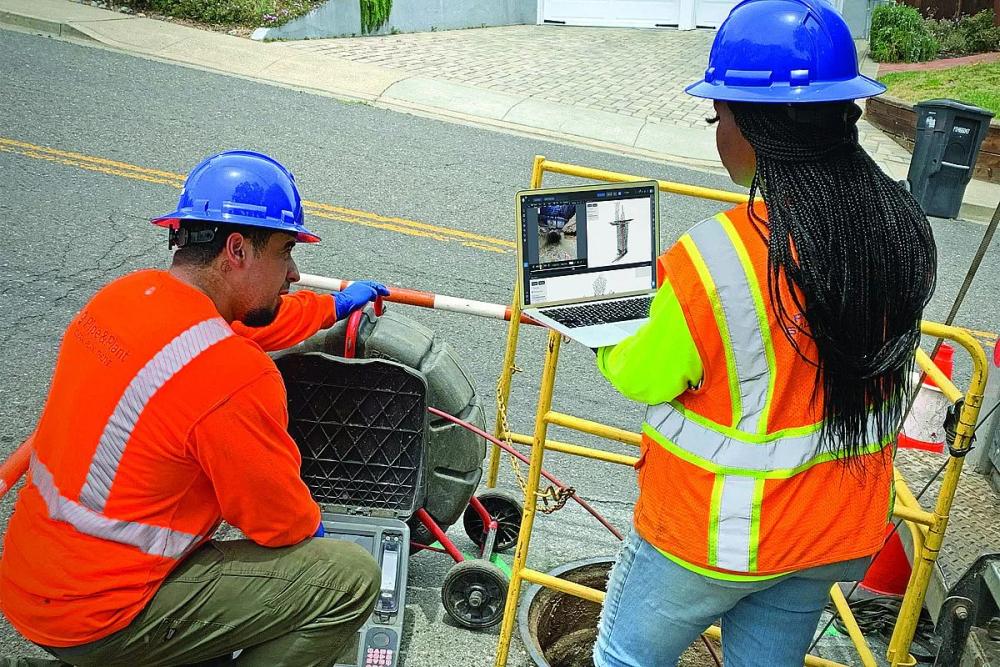
SewerAI was proud to be featured in Cleaner magazine's January 2025 issue, where journalist James Careless explored how artificial intelligence is transforming pipeline inspection workflows. The article highlights SewerAI's AutoCode AI as a leading example of how technology is helping municipalities and contractors do more with less.
The Challenge of Manual Pipeline Inspection
Pipeline inspection is a critical function for municipalities and contractors responsible for maintaining underground sewer infrastructure. Camera crews capture hours of video footage as they traverse pipelines, documenting the condition of pipes and identifying defects that require attention. But capturing the footage is only half the battle — someone still has to watch it all.
Traditionally, certified technicians must sit down and manually review every minute of inspection video, identifying anomalies, coding defects according to industry standards, and producing detailed reports. It is painstaking, time-consuming work. A single sewer video can take hours to fully analyze and annotate — and large datasets can stretch that effort into days.
This bottleneck limits how much work inspection crews can complete, slows down reporting to asset owners, and keeps skilled technicians tied to a screen rather than out in the field where they are needed most.
AutoCode AI: A Smarter Way to Review Inspection Footage
SewerAI's AutoCode is purpose-built to solve this problem. Using Computer Vision AI — a branch of artificial intelligence that enables software to interpret and understand visual information — AutoCode automatically analyzes pipeline inspection videos, detecting and recording anomalies with a level of consistency and speed that human reviewers simply cannot match.
The system has been trained on vast libraries of inspection footage, allowing it to reliably recognize a wide range of defects and conditions — from cracks and root intrusions to joint offsets and debris — and code them according to established industry standards. The result is a detailed, accurate inspection report generated in a fraction of the time it would take a human reviewer.
Matt Rosenthal, CEO and co-founder of SewerAI, explained the impact in the Cleaner article:
Reviewing a single sewer video or larger dataset traditionally takes a certified technician many hours if not days to fully analyze and annotate. AutoCode accelerates the process up to six times while maintaining accuracy.
That six-times acceleration is not just a number — it represents a fundamental shift in what inspection teams can accomplish. Work that once consumed an entire day can now be completed in a matter of hours, freeing technicians to focus on higher-value tasks.
Real Productivity Gains for Inspection Crews
The productivity gains delivered by AutoCode extend well beyond faster video review. When technicians are no longer bogged down in manual coding, they can:
- Spend more time in the field conducting inspections rather than at a desk reviewing footage
- Turn around inspection reports to clients and asset owners much faster
- Take on more projects without adding headcount
- Reduce the risk of human error and reviewer fatigue that can affect the quality of manual coding
For contractors, this translates directly to competitive advantage — the ability to deliver faster, more consistent results at scale. For municipalities managing aging infrastructure on tight budgets, it means getting more value from every inspection dollar spent.
Helping Municipalities and Contractors Do More With Less
Across the water and wastewater industry, the pressure to do more with less is constant. Workforce shortages, aging infrastructure, and growing regulatory requirements are pushing municipalities and contractors to find smarter ways to operate. AI-powered tools like AutoCode are increasingly seen as part of the answer.
By automating the most repetitive and time-intensive parts of the inspection workflow, AutoCode allows organizations to stretch their existing resources further. Smaller crews can handle larger inspection programs. Experienced technicians can focus their expertise where it matters most — on reviewing AI-flagged findings, making judgment calls, and advising on rehabilitation priorities — rather than spending hours on routine video coding.
The technology also supports consistency and quality control. Because AutoCode applies the same trained detection criteria to every video it processes, the results are uniform and auditable — an important consideration for municipalities that need defensible data to support capital planning and regulatory reporting.
AI as a Force Multiplier for Sewer Workers
It is worth emphasizing what AutoCode is not: it is not a replacement for the skilled professionals who conduct pipeline inspections and interpret their findings. Rather, it is a force multiplier — a tool that amplifies what those professionals can accomplish by handling the high-volume, repetitive work of video review so they can focus on higher-order tasks.
This is the broader promise of AI in the infrastructure inspection space: not to replace human expertise, but to make it go further. As the technology continues to mature and improve, tools like AutoCode will become an increasingly standard part of the inspection workflow — helping the industry keep pace with the enormous challenge of maintaining the underground infrastructure that communities depend on every day.
Read the Full Article
The full Cleaner magazine article, "Harnessing the Power of AI for Pipeline Inspection Productivity" by James Careless, is available at cleaner.com.
STAY AHEAD OF THE FLOW
Get SewerAI updates, product news, and practical guidance for modern sewer inspection programs.