Armies of Sewer-Scrubbing Robots Are Fighting Back Against Fatbergs
WIRED covers the global rise of sewer-scrubbing robots and AI technology fighting fatbergs and aging infrastructure, featuring SewerAI founder Matt Rosenthal on the crumbling state of US sewer systems.
This article was originally published by WIRED on November 14, 2019, written by Chris Baraniuk. Read the original article here.
The Fatberg Problem
Deep beneath our cities, a slow-moving crisis has been building for decades. Sewers — some of them Victorian-era infrastructure — are increasingly clogged by fatbergs: enormous, rock-hard conglomerations of congealed fat, wet wipes, cotton buds, and other non-biodegradable items that people flush or pour down their drains. In 2013, a 15-tonne fatberg was famously excavated from a London sewer, shocking the public and putting the issue squarely in the spotlight. Since then, the problem has only grown.
Thames Water alone is responsible for maintaining more than 100,000 kilometres of sewer pipes across London and the Thames Valley — a network so vast that traditional manual inspection methods simply cannot keep pace with the scale of deterioration. The challenge is not unique to the UK. Across the United States, Europe, and beyond, aging sewer infrastructure is straining under the weight of growing urban populations and changing consumer habits.
Robots Enter the Sewers
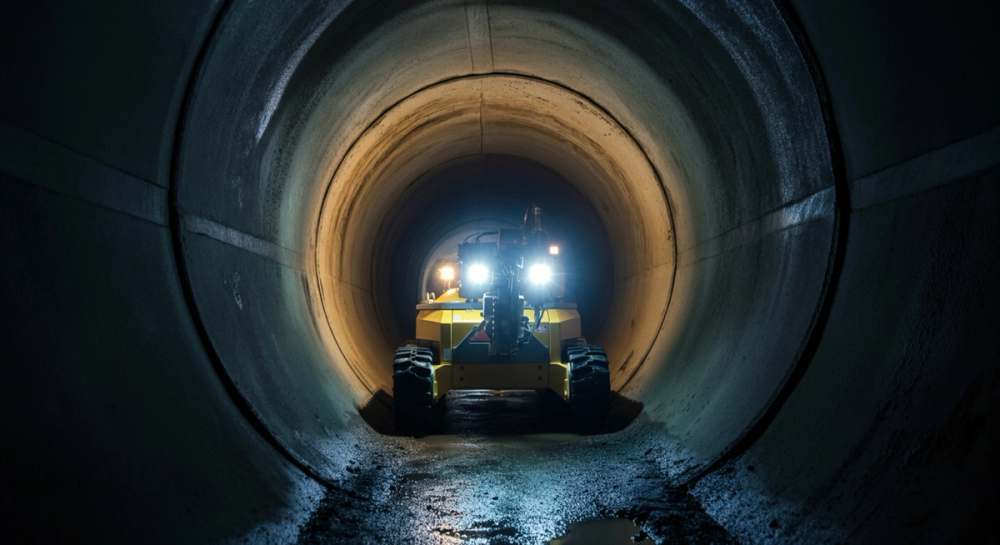
A new generation of robotic technology is now being deployed to fight back. Dutch company Sewer Robotics has developed pipe-crawling devices equipped with ultra-high pressure water jets capable of blasting water at up to 40,000 psi — powerful enough to break apart even the most stubborn fatberg formations. These machines can navigate the cramped, hazardous environment of underground pipes without putting human workers at risk.
Thames Water has also adopted acoustic sensing technology in the form of the SewerBatt device, which can detect anomalies within pipes without requiring physical entry. Combined with automated camera-equipped robots for visual inspection, the utility is building a more comprehensive picture of its underground network than ever before.
AI-Powered Inspection: Doing More, Faster
Robotic hardware is only part of the equation. The real leap forward comes from pairing that hardware with artificial intelligence. DC Water in Washington, D.C. has deployed RedZone automated crawlers alongside its own Pipe Sleuth software — a machine learning platform capable of identifying up to 46 different pipe problems with an accuracy rate of 90 to 95 percent.
The results are striking. Using robotic cameras, DC Water can now inspect approximately five miles of pipe per day — roughly three times the throughput of traditional manual methods. Pipe Sleuth's automated analysis also reduces inspection costs by up to 75 percent, freeing up resources that can be redirected toward repairs and upgrades.
SewerAI: Tackling America's Crumbling Infrastructure
California-based SewerAI is at the forefront of this AI-driven transformation. Founded by Matt Rosenthal, SewerAI develops software that automatically identifies problems in pipes — including greasy blockages and structural defects — by analyzing sewer inspection imagery regardless of how it was originally collected. Hours of video footage that would take a human inspector days to review can be interpreted in a fraction of the time.
Rosenthal is candid about the urgency of the problem in the United States. Speaking to WIRED, he described the state of American sewer systems in stark terms:
"The EPA has actually gone out and sued 92 per cent of the sewer systems out there, forcing them to do all of this inspection and upgrade."
The regulatory pressure is real — and so is the infrastructure deficit. Rosenthal describes US sewer systems as "crumbling around us," a sentiment echoed by engineers and utility managers across the country. SewerAI's technology offers a scalable path forward: by dramatically accelerating the inspection and analysis process, municipalities can identify and prioritize the most critical repairs before failures occur.
Algorithmic Decision-Making Underground
Beyond inspection, AI is also reshaping how utilities decide where to direct their maintenance resources. Thames Water's i3 system — standing for Information, Insight, Intervention — is an algorithmic decision-making platform that analyzes data from across the network to determine where work is most needed. By 2019, i3 was directing 75 percent of Thames Water's maintenance works, representing a fundamental shift in how one of the world's largest water utilities operates.
This kind of data-driven prioritization is critical when the scale of the problem outstrips available resources. Rather than relying on reactive responses to blockages and failures, utilities can now take a proactive, evidence-based approach — deploying crews and equipment where they will have the greatest impact.
A Proving Ground for 21st-Century Technology
The sewer may not be the most glamorous setting for technological innovation, but it is proving to be one of the most consequential. As WIRED's Chris Baraniuk concludes: "In many ways, sewers are a fertile proving ground for the robotic and algorithmic solutions of the 21st Century."
For companies like SewerAI, the mission is clear: harness the power of artificial intelligence to help cities understand, maintain, and ultimately modernize the hidden infrastructure that keeps them functioning. The fatbergs won't disappear overnight — but with the right technology, the fight against them is finally being won.
STAY AHEAD OF THE FLOW
Get SewerAI updates, product news, and practical guidance for modern sewer inspection programs.