Inspection at the Speed of Cleaning
How the City of Mesa used AutoCode and a custom GoPro workflow to eliminate manual coding, combine cleaning and inspection into a single pass, and expand condition assessment coverage far beyond traditional CCTV.
About the City of Mesa
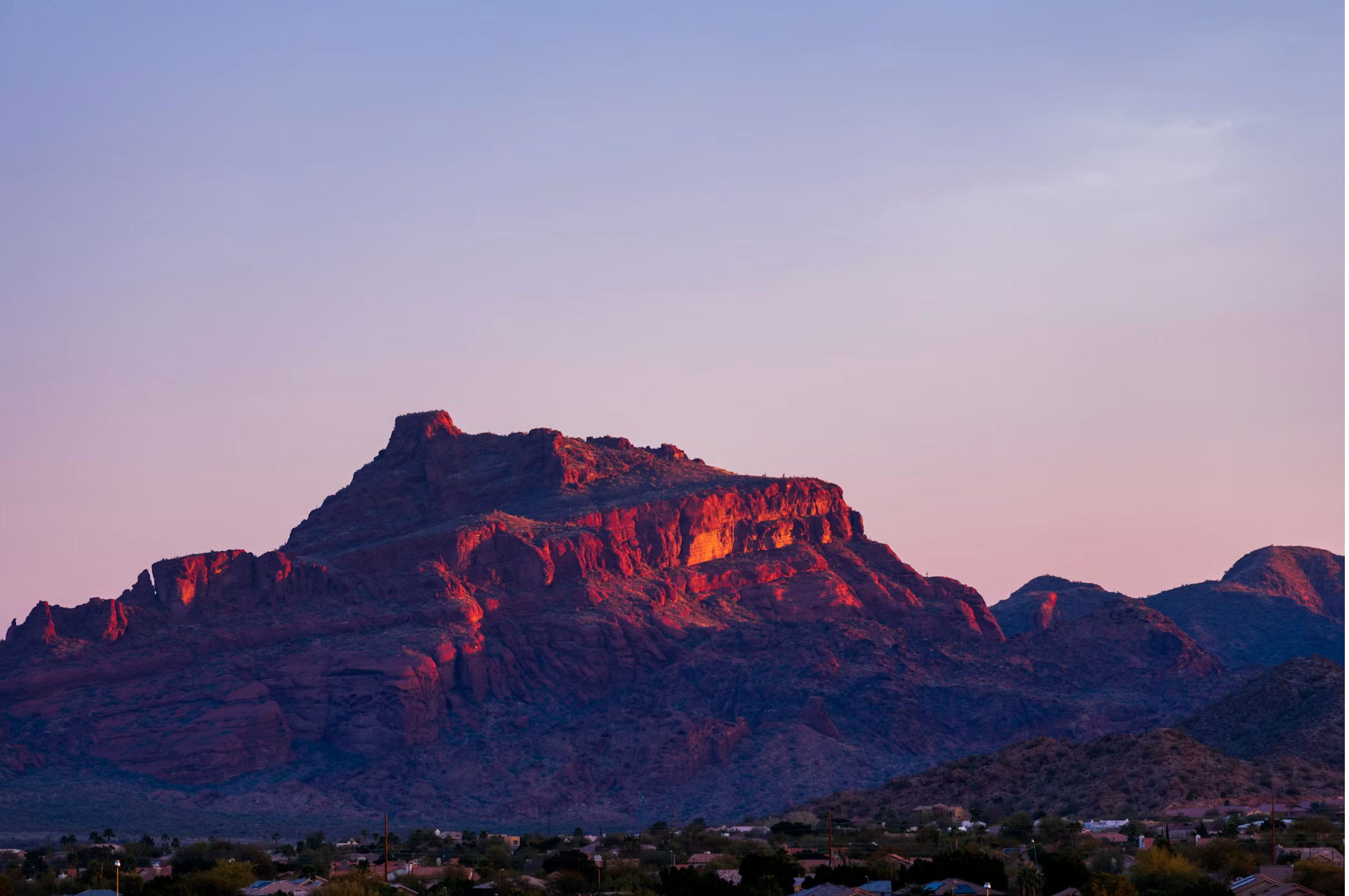
The City of Mesa is the third-largest city in Arizona and the 36th-largest in the United States, serving more than 500,000 residents in the eastern Phoenix metro area. Mesa Water Resources operates the city's wastewater collection system: roughly 1,850 miles of pipe, 35,000 manholes, 16 lift stations, 4 wastewater treatment plants, and a large reclaimed-water network that distributes treated water to key regional partners.
Day-to-day operations of the collection-system program are led by Wastewater Collection Superintendent Barrett Brickner and a field team of 26 employees. The program runs five VAC trucks, one CCTV van with a second in procurement, an AquaStar recycler truck for large-diameter cleaning with a second arriving in October, and an NGI camera system. Behind that equipment sits a deep bench of acoustic SLRAT inspection, GoPro manual scanning, and CCTV inspection capability that the team has built into its own pre-assessment workflow.
Like every public utility, Mesa Water Resources operates under a dual mandate: delivering reliable, regulatory-compliant infrastructure services while managing public funds carefully. The team's challenge is to assess and maintain a large, aging collection system at scale, faster and at lower cost, without sacrificing the data quality on which capital planning decisions depend.
The Challenge
Before SewerAI, Mesa ran on a legacy platform. The camera crew did the full loop themselves: inspect the pipe, then sit down at a workstation and code the inspection manually to NASSCO PACP and MACP standards.
Manual coding burned a day a week. Sometimes crews batched it into longer sessions, but the math was the same: roughly one day per week, per person, lost to office work instead of field work. The people best at running a camera truck were also the people best at coding the footage, and they couldn't do both.
"My guys want to be out there. They want to inspect the pipe. They don't want to be stuck in the office coding."
— Barrett Brickner, Wastewater Collection Superintendent, City of Mesa Water Resources
Meanwhile, Mesa's third-party inspection contractors were already using SewerAI's AutoCode to process the work they delivered to the city. As a result, Mesa's inspection records were stored in an external environment, leaving the city without direct access to the coding platform, without volume-based pricing for its own data, and without the ability to apply the same operating model to its in-house crews. The team needed a workflow that maximized field crew time in the field and brought the AI coding pipeline inside Mesa's own operations.
The Solution
Mesa evaluated SewerAI head-to-head against a competitor and at least one other AI coding solution before signing on in November 2024. Three things tipped the decision.
The QA model
SewerAI's AutoCode output is reviewed by a NASSCO-certified operator, with an additional ~10% random QA/QC layer on top. That gave Mesa's engineering team confidence that the coded data could be trusted to the same standard as a human-coded inspection, while reducing the labor Mesa's crews would have to perform.
The contractor footprint
SewerAI was already an industry standard among Mesa's inspection partners. Acquiring its own AutoCode subscription meant the city could route contractor-collected footage through its own environment, unlock volume-based pricing, and consolidate control of the coded record under one platform, reducing handoffs and centralizing the workflow.
The platform itself
Easy to use, on the cutting edge of industry standards, and built so any user in the city's organization can find an inspection video and make their own decisions about what it means, without routing the request through the camera operator who shot it.
Reclaiming the field with AutoCode
The most immediate change was the elimination of manual coding. With AutoCode handling all PACP inspections, Mesa's camera crews now collect data in the field rather than spending time on office-based coding. Operators who previously devoted one day each week to coding now allocate that time to fieldwork. According to Barrett, this adjustment has produced an estimated 25% reduction in coding-related labor, reflected in the increased annual pipe assessment capacity of the crews.
Building a GoPro inspection skid
The more ambitious change happened in the field. Working with SewerAI and an equipment vendor, Barrett's team designed and built a custom skid that integrates a GoPro camera directly onto Mesa's AquaStar recycler truck. The skid pulls GPS and truck telemetry, overlays it on the GoPro footage, and uploads the video into SewerAI for AutoCoding.
The part of the workflow Barrett emphasizes most is what happens after a routine cleaning pass. As the AquaStar moves through a line, the mounted GoPro captures footage while the truck's telemetry overlays GPS and run data. AutoCode then processes that footage, coding it to the same NASSCO PACP standard as any other inspection in Pioneer. Cleaning and inspecting the pipe have become a single, integrated process.
"They can clean pipe way faster than they can camera pipe. So we can get through our system faster and find issues and problems at a faster rate."
— Barrett Brickner, Wastewater Collection Superintendent, City of Mesa Water Resources
The expensive CCTV vans are now reserved only for locations that truly require a detailed inspection. For Mesa, that compounds the productivity gain. For the wider industry, it opens a path for resource-limited utilities to run real condition-assessment programs with consumer-grade hardware they may already own.
Pre-scanning manholes ahead of contractors
The team applied the same logic to manhole work. Out of 35,000 manholes in the system, Mesa now uses the GoPro workflow to pre-scan manholes before third-party contractors arrive for large inspection projects. The pre-scan produces an MACP-coded baseline through AutoCode, reducing the contractor's scope and bill. Work that used to be outsourced to engineering firms is increasingly being done in-house.
Results
Half a workday recovered
The integrated cleaning and inspection workflow significantly increases productivity. Field operations previously required either two separate passes, one for cleaning and one for televising, or two crews working simultaneously. Now both tasks are completed in a single pass.
"You just gained 50% back to your workday. It's a way to do more with less."
— Barrett Brickner, Wastewater Collection Superintendent, City of Mesa Water Resources
~25% labor reduction in coding work
Mesa's camera operators are no longer pulled off the truck to do manual coding. Barrett estimates the productivity gain at approximately 25%, measured not by time saved per task but by how much pipe the crews can assess in a year now versus before SewerAI.
In-house work that used to be contracted out
Mesa now conducts MACP pre-scans, SLRAT acoustic triage, and GoPro manual inspections in-house, all tasks previously outsourced to third-party engineering firms. The team has established new internal KPIs for the manual GoPro inspections, and the capacity freed by AutoCode's labor savings is being redirected rather than eliminated. On average, field crews now complete 500 Level II MACP inspections every month.
Industry visibility
Barrett presented two main-stage sessions on the combined cleaning and AutoCode workflow at AZ Water in April 2026, and has actively shared details of Mesa's program with peers at regional and national wastewater forums. In August 2026, he presented the integrated GoPro and AquaStar recycler PACP assessment at the Tri-State Seminar. Interest from other utilities has been strong, as the nationwide challenge to do more with less continues.
In their own words
"Whatever you're paying for software maintenance, you could be paying for SewerAI instead. And the savings from doing internal MACP inspections offset the cost. So it pays for itself."
— Barrett Brickner, Wastewater Collection Superintendent, City of Mesa Water Resources